Built for the Heat: High-Temperature Hazardous Location LED Lighting and Why UL 844 Matters
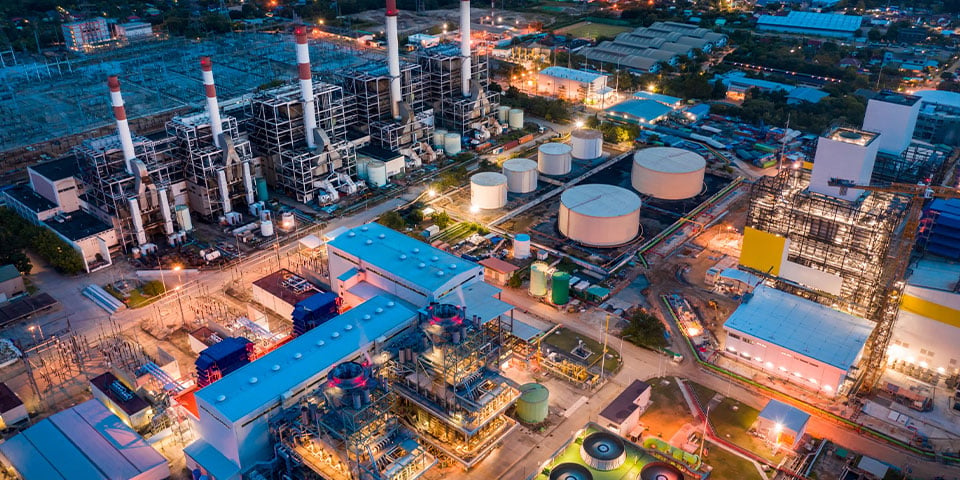
Some of the most demanding lighting jobs anywhere combine two threats: flammable atmospheres and extreme heat. Picture a refinery process unit in August, a paint-finishing line, or a chemical plant where fixtures sit near ovens, dryers, and steam lines. Lighting in these spaces has two jobs.
It has to hold up in punishing temperatures, and it can never become the thing that ignites the air around it. High-temperature hazardous location LED lighting is built for exactly this. In this post we’ll cover what makes these environments so difficult, how heat affects LED performance, and why certification to UL 844 is the benchmark every fixture in these spaces should meet.
https://specgradeled.com/hazardous-location/product/maxtemp-d1-with-pendant-mount/
What Makes a Location “Hazardous”?
In the United States, hazardous locations are governed by OSHA 29 CFR 1910.307. The regulation classifies areas based on the properties of any flammable vapors, liquids, gases, combustible dusts, or fibers that may be present, and on how likely it is that a flammable or combustible concentration will occur. OSHA points to aircraft hangars, fuel dispensing stations, bulk gasoline storage, paint-finishing plants, agricultural facilities with heavy dust, marinas, and petroleum and chemical processing plants as typical examples, and it requires each room or area to be classified on its own.
OSHA recognizes two classification systems, class/division and class/zone. Class I covers flammable gases and vapors, Class II covers combustible dusts, and Class III covers ignitable fibers and flyings. The American Industrial Hygiene Association has a helpful primer on hazardous location classification that also notes OSHA’s requirement that classification and equipment selection be supervised by a qualified registered professional engineer.
The installation rules come from the National Electrical Code (NFPA 70), specifically Articles 500 through 506. The NEC is adopted in all 50 states and serves as the benchmark for safe electrical design, installation, and inspection.
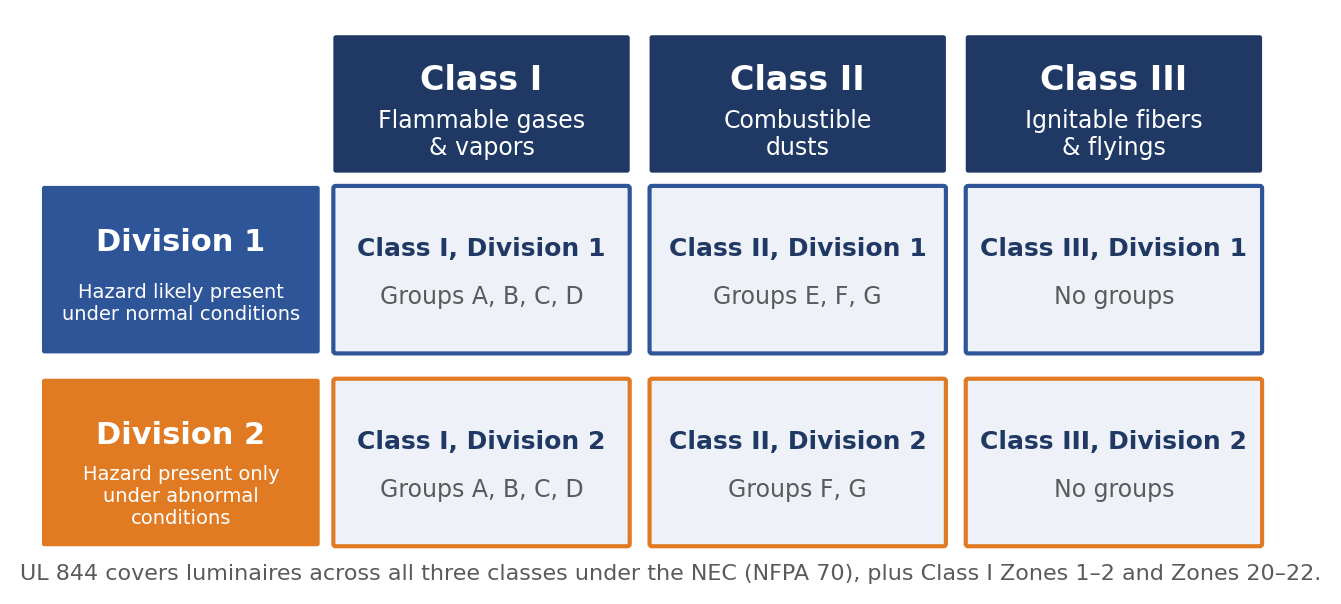
Figure 1. The NEC class/division system for hazardous locations.
Heat Is the Hidden Hazard: Understanding T-Codes
When most people think of explosion-proof lighting, they picture sparks and arcs. Surface temperature is just as important. A fixture with no spark at all can still ignite a flammable atmosphere if its housing gets hot enough.
That’s why hazardous location equipment carries a temperature code, or T-code. The temperature class sets the maximum surface temperature a product may reach in a potentially hazardous atmosphere, based on an ambient range of -20°C to +40°C, with ratings from T1 to T6. At one end, T1 allows up to 450°C (842°F). At the other, T6 caps surface temperature at 85°C. Nidec’s hazardous locations technical guide has the complete NEC table, including intermediate codes like T2A and T3C.
The T-code you need depends on the autoignition temperature of the materials present. Autoignition temperature is the lowest temperature at which a substance ignites on its own. Diesel autoignites at about 240°C, diethyl ether at 160°C, and carbon disulphide at just 95°C. There’s a detailed T-class breakdown here.
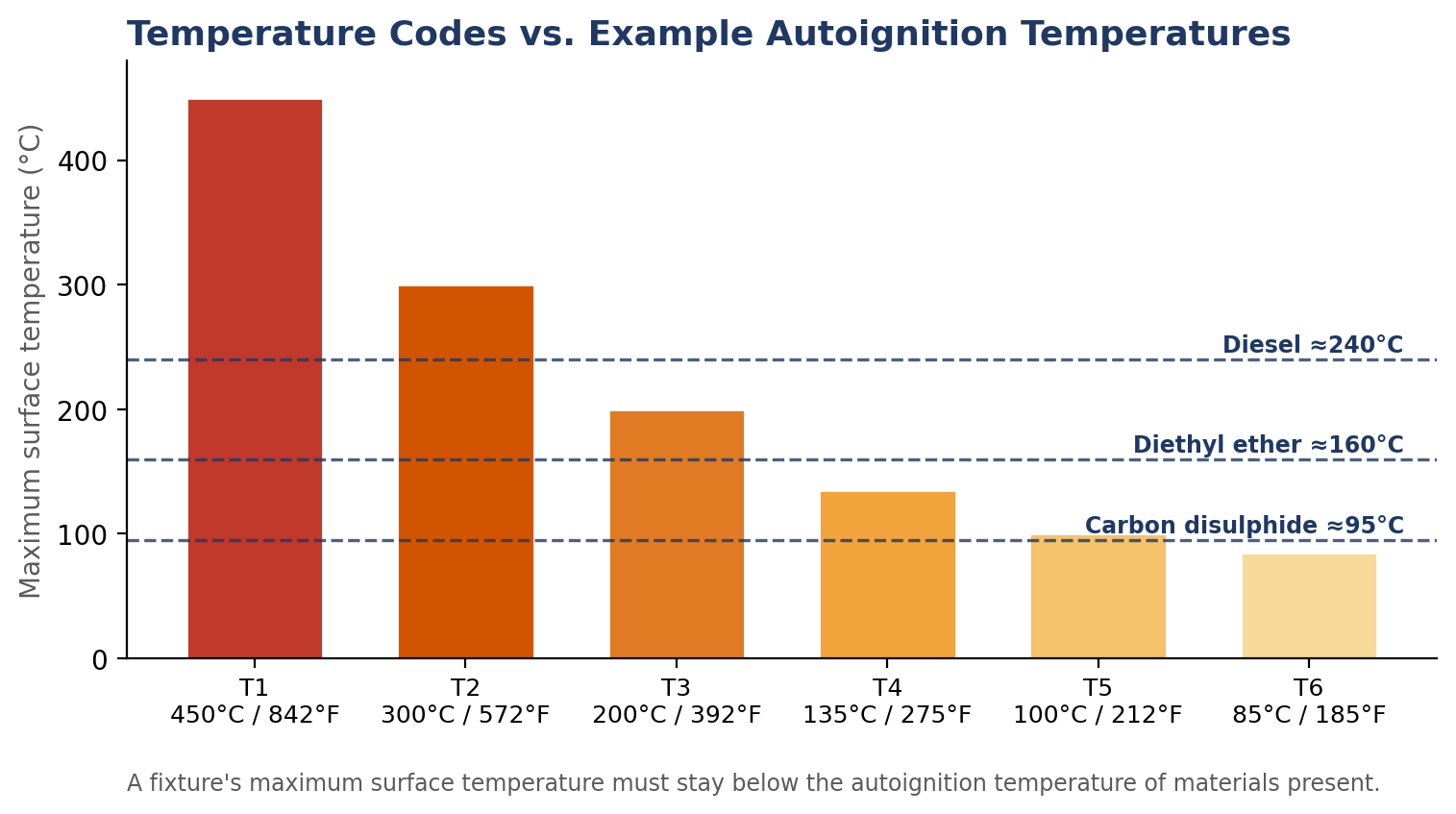
Figure 2. A fixture must stay below the autoignition temperature of materials present. Example autoignition temperatures are approximate.
This is where high-ambient applications get tricky. The U.S. Coast Guard’s Drill Down bulletin on temperature class markings explains that equipment labels must include an ambient temperature marking when the rating falls outside the standard’s normal range. A fixture rated T4 at 40°C won’t necessarily hold that rating at 65°C. High-temperature hazardous location fixtures are engineered and tested to keep their T-code at elevated ambient temperatures, not just in a climate-controlled lab. For a deeper technical walkthrough, IEEE’s hazardous location product suitability webinar covers how to match equipment markings to your site classification step by step.
Why Heat Is Hard on LEDs
LEDs are far more efficient than the HID and incandescent sources they replace, but they aren’t heat-free. According to LEDs Magazine, a typical LED converts about 15% of its energy into visible light and roughly 85% into heat. Without good heat sinking, the LED’s junction temperature rises and its characteristics change, with both forward voltage and lumen output dropping.
The U.S. Department of Energy’s guide to thermal management of white LEDs names three factors that set junction temperature: drive current, the thermal path, and ambient temperature. In a high-temperature hazardous location you can’t control the ambient, so the other two have to do the work.
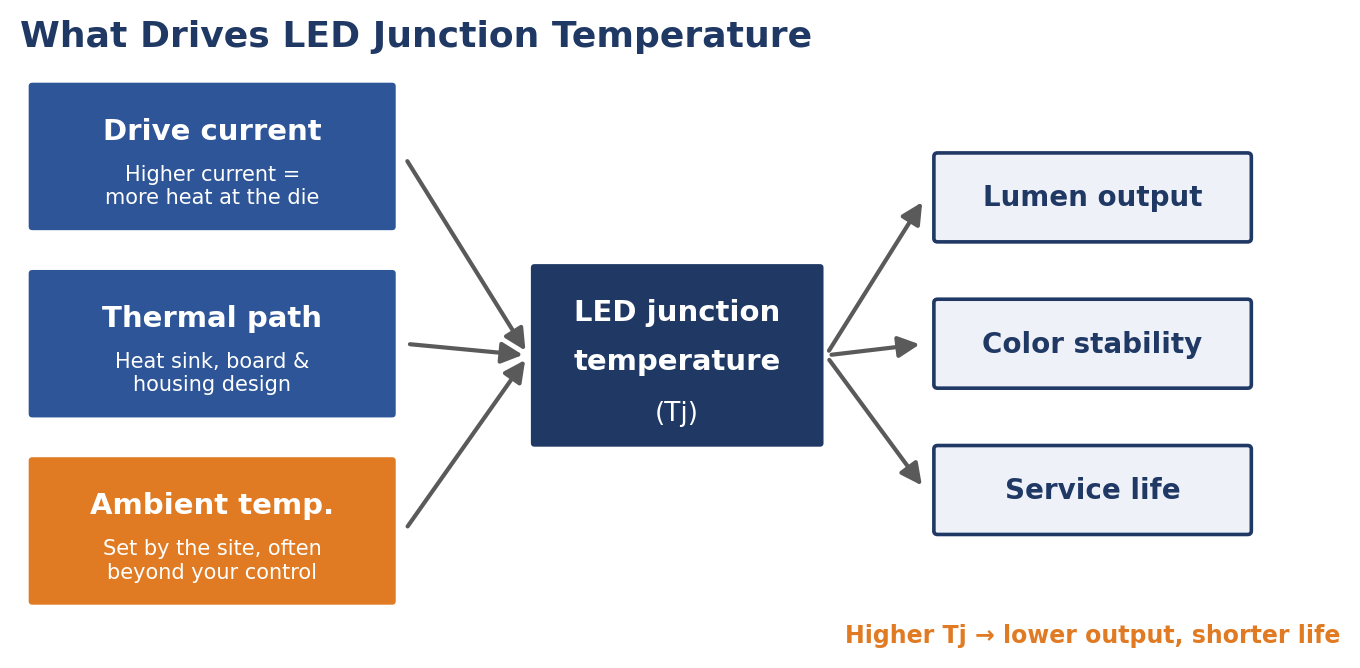
Figure 3. Three factors set LED junction temperature, which in turn drives output, color, and life.
Lifespan is on the line too. As one LED thermal management patent explains, higher ambient temperatures raise junction temperature, which shortens LED life. LED Rise’s guide to heat management walks through the math for a closed luminaire in a 60°C environment and warns that low-priced products often perform poorly at high temperatures and may lack complete data on real-world performance and lifetime.
Well-engineered high-temperature fixtures handle this with several design choices:
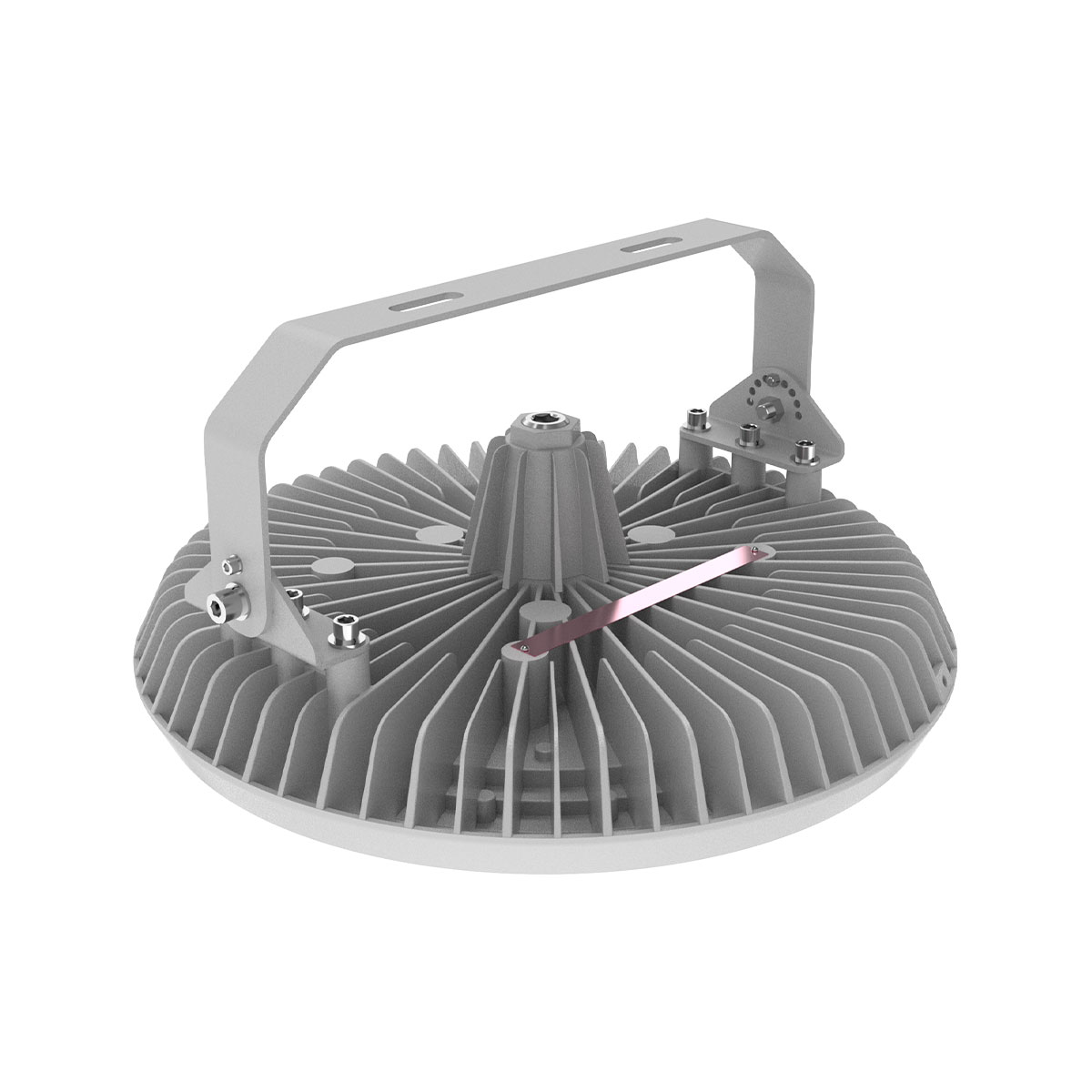
- Heavy-duty heat sinking. Finned aluminum housings pull heat away from the LED board.
- High-temperature drivers. The driver components are rated for the heat, or the driver is mounted remotely, away from the hottest zone.
- Premium LED packages. The emitters are selected for stable output at elevated junction temperatures.
- Thermal protection circuitry. The fixture reduces its output before temperatures reach unsafe levels.
What UL 844 Covers
UL 844, Luminaires for Use in Hazardous (Classified) Locations, is the North American safety standard for this class of lighting. According to the standard’s published scope, it covers fixed and portable luminaires for Class I, Divisions 1 and 2, Groups A through D; Class II, Groups E, F, and G; and Class III, Divisions 1 and 2, in accordance with NFPA 70. It also covers Class I, Zones 1 and 2, and dust Zones 20, 21, and 22.
UL 844 is not a paperwork exercise. Certification involves extensive testing of electrical safety, enclosure strength, sealing and gasketing, and thermal performance, including verification of T-code ratings. Products are also evaluated for resistance to corrosion, vibration, moisture ingress, and mechanical impact. Commercial LED Lights outlines the steps, noting that the process includes compliance testing, reporting of results, manufacturing facility inspection, authorization of the UL Mark, and ongoing follow-up testing and inspections.
The standard also evolves over time. In Compliance Magazine and Intertek have both published updates on revisions. Intertek’s notice explains that after a revision, listing reports must be reviewed to determine which products comply with the new requirements and which need re-evaluation.
LED hazardous location fixtures are often certified to several standards at once. For example, this UL Certificate of Compliance shows UL 844 listed alongside UL 1598 for luminaires, UL 8750 for LED equipment, and the corresponding Canadian CSA standards.
SpecGrade Fixtures Meet UL 844
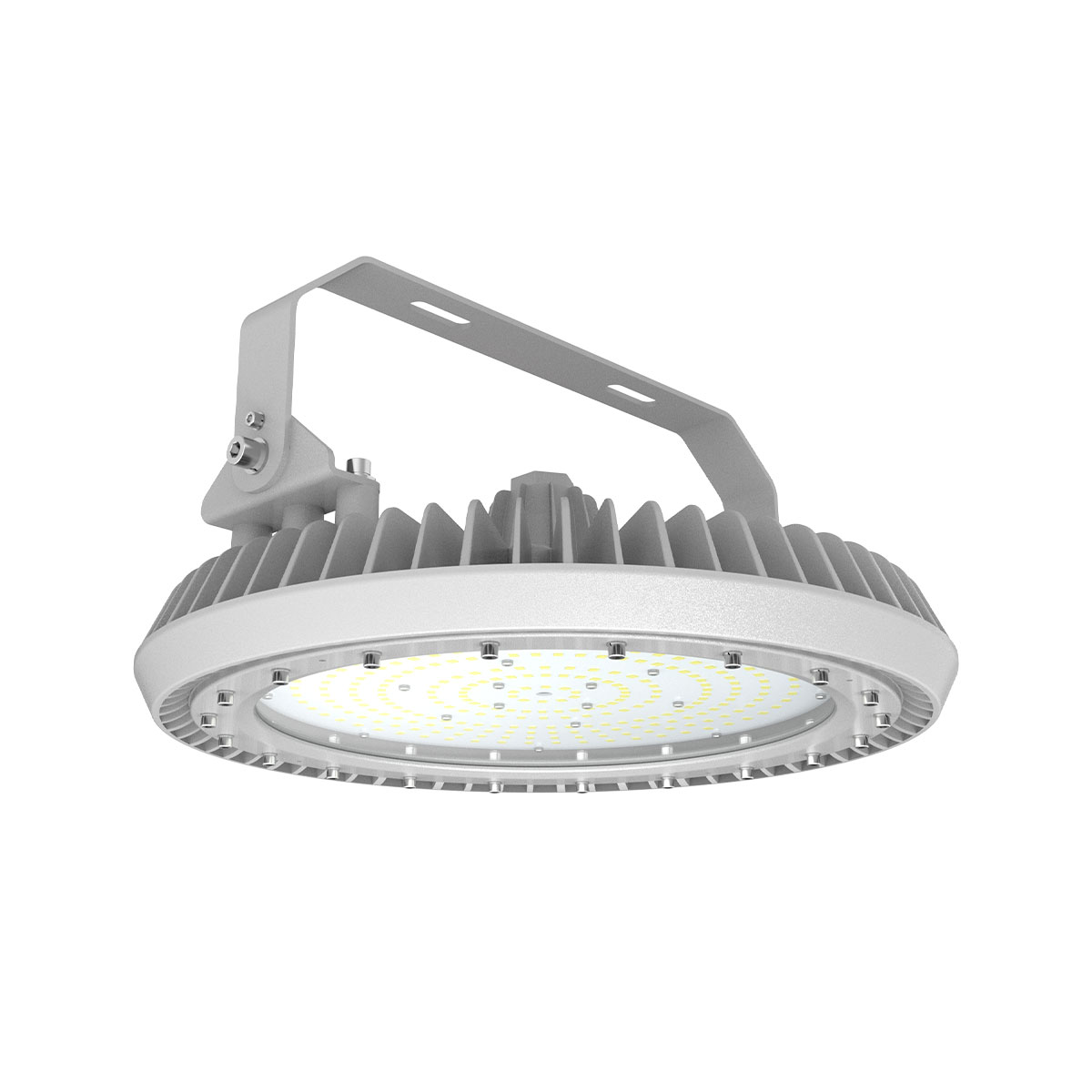
SpecGrade’s high-temperature hazardous location LED fixtures are certified to UL 844. They have been independently tested to confirm they won’t become an ignition source in the classified environments they’re rated for, even when operating at elevated ambient temperatures. That certification backs up every design choice described above, from the heat sink to the driver to the gasketing. For the facility owners, engineers, and electrical contractors who specify SpecGrade products, it means confidence that the fixture will pass inspection, protect workers, and deliver long, reliable service in conditions that quickly destroy ordinary lighting.
https://specgradeled.com/hazardous-location/product/maxtemp-d1-with-pendant-mount/
Why Certification Isn’t Optional
Specifying a certified fixture is more than good practice. It’s the law. Equipment in hazardous locations must be approved for that location, and OSHA ties approval to third-party certification. In a standard interpretation letter, OSHA explained that under its definitions of “approved” and “acceptable,” equipment for classified locations must be certified by a Nationally Recognized Testing Laboratory (NRTL).
OSHA’s NRTL Program recognizes private organizations that certify products against OSHA’s electrical standards. Each NRTL applies its own registered mark to show a product complies with the applicable safety standards. OSHA’s NRTL FAQ notes that the program’s regulations date to 1988, and NRTLs must remain completely independent from both manufacturers and the employers who use the equipment. UL Solutions, for its part, announced in 2024 that 55 of its facilities are now Recognized Testing Sites under the NRTL Program.
Choosing the Right Fixture
When you evaluate high-temperature hazardous location LED lighting, start with your area classification drawings. Confirm the class, division or zone, and group. Then compare the fixture’s T-code with the autoignition temperature of every material present. Check that the T-code holds at your actual maximum ambient temperature, not just the standard 40°C. Look for the UL 844 listing and an NRTL mark on the product itself. Finally, ask for lumen maintenance data measured at elevated temperatures, since that tells you how the fixture will really perform over its life.
Hazardous locations leave no room for guesswork. By choosing LED fixtures built for extreme heat and certified to UL 844, you protect your people, your facility, and your bottom line, and you get bright, efficient light that lasts.
About The Author
Rick Nathans and Doug Lauck are the CEO and COO respectively of SpecGrade. Both have worked in LED lighting since 2010 and have contributed to the design of numerous LED luminaires. They stay close to the details — temperature codes and area classifications, driver selection, optics, mounting hardware, and serviceability — which lets them support customers through design reviews, standards compliance discussions, and value engineering exercises with safety and uptime front and center.
About SpecGrade
Based in Columbus, Ohio, SpecGrade designs and distributes commercial and industrial LED luminaires for mission-critical environments where safety, uptime, and compliance are non-negotiable. Its position in the supply chain allows for certain fixture modifications while maintaining UL 844 compliance, along with updated BIM/Revit files for the project. Many of SpecGrade’s industrial fixtures are purpose-built for hazardous and classified locations containing flammable gases, vapors, combustible dusts, or ignitable fibers, protecting people, facilities, and assets while delivering dependable, high-quality illumination.